Table of Contents

QUESTIONS & ANSWERS
TED'S RECIPE
ACID REFLUX
ACV AND BAKING SODA COMMENTARY
ACV AND BAKING SODA IS AN OLD TIMER'S REMEDY!
MYASTHENIA GRAVIS
READER FEEDBACK
2 3 4 5 6 7    Next 

Baking Soda and Apple Cider Vinegar

Updated: 08/23/2008

Continued from our main Apple Cider Vinegar Page...


TED'S RECIPE

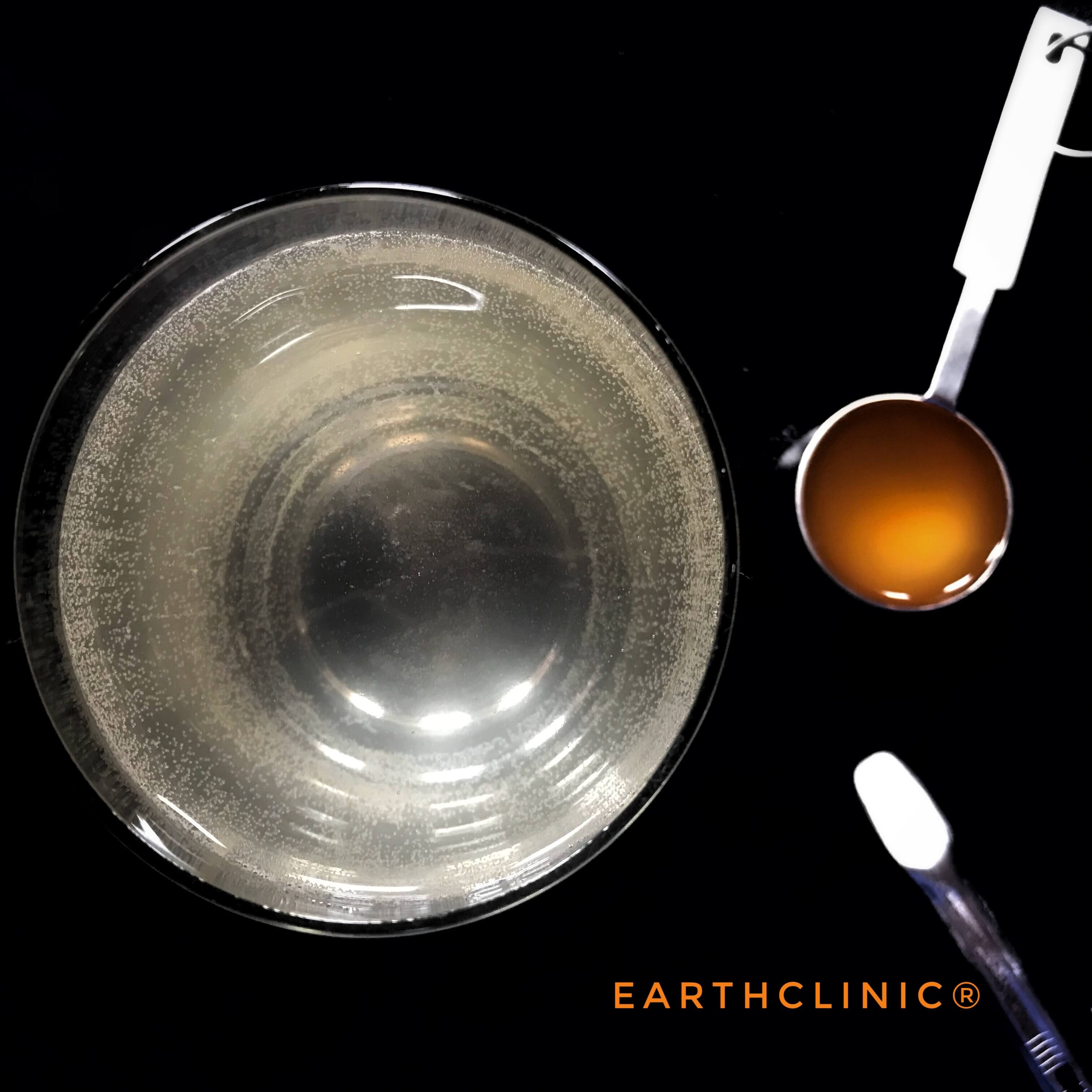
Ted from Bangkok, Thailand writes: There is an ACV remedy and then there is Ted's ACV remedy. The ACV remedy is what has been traditionally done to drink it directly. Now I have always recommended the use of the second one, which requires that you add baking soda to the ACV to neutralize the acid to just 7.0 or close to it before drinking, otherwise the acidity will bring on dentin sensitivity and cause erosion of the enamel. A minimum pH on ACV of 6.0 and above should stop enamel erosion, in case you like somewhat of a "sour" ACV tastes, ideally it should be closer to 7.0.

You might wonder whether therapeutic effectiveness of the second one might be as effective as the original one. It should be at least as effective if not more effective than an original formula for two reasons:

1. If you take the original ACV remedy (2 TBS of ACV in a glass of water), the body is going to neutralize it anyway using the available bicarbonates the body stores have. If not, you get a burning tongue or skin of the tongue become lose or tears up, if the body don't have sufficient bicarbonates. It takes AT LEAST A week to get a bicarbonate level to optimum provided you take bicarbonates everyday. I am of course assuming that in this instance, you don't have sufficient bicarbonate levels.

2. The newer ACV remedy I have always recommended (AKA Ted's ACV recipe) is to ADD baking soda until most of the acid is neutralized near 7.0. Chemically it is not changed, the malic becomes a malate when baking soda has neutralized, but then the body is going to convert to THAT anyway. What YOUR body wants is that the pH is at an ideal theoretical pH 7.35, which is equivalent to the pH of your blood.

So for me an ideal food, whether we talk about ACV or any other food should GENERALLY be slightly alkaline. If you don't do it for your body the body will change to an alkaline anyway, provided that your body is FIT to do that! So it is best not to assume that your body is FIT and it is best to assume the worst and just add the baking soda as a precaution.

Making it alkaline will give you the extra benefit of more oxygen in your body and greater buffers the body need so you should in fact feel better with the newer formula. In fact, athletes takes pure baking soda to relieve them of muscular pain from long physical endurance. Thinking along this makes it easier to use this newer formula as well as protect against enamel erosion.

Many people have misinterpreted the event where a body becomes alkaline in event of a person becomes sick to be a "bad thing". However, this is HOW a body kills off invading bacteria and viruses by raising up the alkalinity level. So in fact alkalinity is actually needed. When an immune system is suppressed or destroyed (from surgery or chemical toxins), the body will raise its alkalinity level much more frequently than a healthy person. What a potentially sick person needs to do is to give sufficient buffers for alkalinity using baking soda, but also regenerate the body's immune system (the thymus) with supplementation of secretogues, such as L-glutamine, melatonin, and iodine from seaweed and kelp.

HOW MUCH BAKING SODA SHOULD YOU ADD?
The amount of ACV needed to react with baking soda to get to pH level of near 6.5-7.0 depends on the brand of ACV. For my own brand of ACV, it is approximately 50 ml-70 ml per one tablespoon of baking soda. So always start on the low side first!

If you are not used to it, try only 1/4 teaspoon of baking soda - the safest possible mixture assuming 2 tablespoon of ACV in a 250 mg water. Then increase slowly as needed. For tougher cases like Acid Reflux, you can go up to 2 tablespoons but you must start slowly or you will upset your stomach. Most people will not need this much baking soda.

If you have a pH meter handy, it would be more easier go that way and just add enough until it reaches near pH of 7. It is very much dependent on what brand your ACV is generally. Please note that these are approximate figures.

One more important note!

Warning: if you mix baking soda with ACV it will create a lot of bubbles that goes very high! You need to mix inside a large empty pitcher! Also add the ACV very slowly! For me, I don't use ACV here in Bangkok that often because of the price. I just use simple vinegar, so I usually will not have the bubbling issues!

HOW OFTEN SHOULD YOU TAKE THIS FORMULA IF YOU HAVE ACID REFLUX?
Take this formula 2 - 3 three times a day on an empty stomach.

SHOULD YOU TAKE IT EVERY DAY?
No, take it for 5 days, then stop for 2 days.


04/23/2007: Janelle from Brisbane, Australia replies: "After reading a lot of comments regarding this remedy, it seems that people are getting confused between Bicarb Soda and Baking Soda. They are two different products. Could you please make it clear to those people who are referring to Bicarb Soda. Thanks.

4/24/2007: Janelle writes again: "Hi, I wrote to you yesterday asking if you could advise people about the difference between Baking Soda and Bicarbonate Soda. It seems that it was actually my mistake. In Australia and England (it seems) we don't refer to a product called Baking Soda. We call it Bicarb Soda. I think some people outside the US are getting confused because we also have Baking Powder which is a different product, usually Wheat/Corn flour with added Mineral Salts. Bicarb Soda is definately Sodium Bicarbonate and is the correct product. Hope this clears things up. Thanks for the great website."


EC: Thank you for the clarification!

Reply to this TopicE-mail this TopicPrint this TopicBack to Top


ACID REFLUX

2 YEA   

[YEA]  06/07/2008: Sabrina from Roseville, California writes: "Thank you! My son has severe acid reflux attacks. Desperate last night I went on line and found this site. Within minutes of taking a couple of drinks of apple cider vinegar and baking soda his pain subsided and he was able to sleep. He was a new person this morning! He is 19 and has suffered from bouts of acid reflux since he was 5."

Reply to this FeedbackE-mail this FeedbackPrint this FeedbackBack to Top


[YEA]  04/17/2008: Lee (KELLEEFA@MSN.COM) from Bradford, England writes: "Hi there my name's Lee Flavell and i suffer from acid reflux and have done for the past 13 years. I have been taking losec/Lansoptrazole they worked in a kid of way ie stopped the acid burning me thruogh the day.I have had my bed proped up around 2 inches at the top end to stop the acid running back into the gullet when sleeping. It never helped me realy.I could only sleep on my right hand side and if I rolled over onto my back or other side I would wake in pain. 10 years ago I had a major op hiatus hernia removed due to the acid reflux.It was a nightmare.It made me feel like i was going to die I was in so much pain.But it worked he he for about 6 months boo hoo. I recently found this website by some miriclal.I read all the feedback on the acv and thought if only.I tried 2 teaspoons of organic acv and 1 teaspoon of bicarb soda in a glass of water for bed praise the lord i can sleep on my back and both sides now i feel like a new person.I would like to thank the people who set this website up and all the people who gave there feed back.Thankyou so much for helping me.I have stopped taking the lose and feel much better..Bow to the god of apple cider vinager ha ha. Thanks again Lee Flavell. UK."

Reply to this FeedbackE-mail this FeedbackPrint this FeedbackBack to Top


ACV AND BAKING SODA COMMENTARY


06/01/2008: A (akr@rungta.us) from Jersey City, USA writes: "I am posting this question for commentary from informed readers and Ted.

First of all, I am NOT an expert, and all my knowledge is really just based on what I've read. I have been grappling with the issue of whether combining ACV & Baking Soda diminishes its effectiveness in any way in the body. I've read practically all the comments on the Earthclinic website related to this in great detail. A nagging suspicion in my gut tells me that taking ACV with baking soda is NOT the same as taking ACV and/or baking soda alone. Unfortunately, I don't have enough expertise or knowledge to put together a plausible thesis; and all my exhaustive research has NOT provided me a convincing answer yet. Therefore, I am merely positing a hypothesis for question/commentary from informed readers.

Here it goes. My gut feel, and based on whatever information I can gather, taking ACV with Baking Soda (or Lime with Baking Soda), is probably NOT the same as taking either of those alone. The body needs to break down complexed minerals (such as sodium ascorbate, magnesium citrate, etc.) into ions before they can be absorbed. Therefore, when you react ACV with baking soda, that is no different than taking a complexed mineral of sodium acetate and sodium malate, together with whatever else might be in the ACV. Now, does the body absorb the sodium malate and sodium acetate the same way as it would the acetic acid and malic acid to be found in ACV alone? How easily does the sodium malate or sodium acetate breakdown in the body for absorption vs. just taking the ACV alone? That's the question? My nagging suspicion is that the body doesn't treat them the same way, in which case the effectiveness of ACV would get diminished by combining it with Baking Soda.

I understand Ted's point that the body is going to neutralize the acids anyways with its mineral buffers. But what comes first? Does the body absorb the malic acid and acetic acid first before neutralizing? If so, then is sodium malate or sodium acetate correspondingly harder to absorb by the body b/c it has to be broken down and ionized first?

I was reading Tim O'Shea's online book on how minerals get absorbed in the body (http://www.thedoctorwithin.com/minerals/Minerals.shtml). He says that acidic state is necessary for ionization of complexed minerals. In other words, for a sodium malate to breakdown into ionic sodium and malate to be absorbed by the body. I quote from his online book "If the pH is too alkaline, the ions won't disassociate from whatever they're complexed with, and will simply pass on through to the colon without being absorbed." So, my question is, does most of the ACV when combined with baking soda just gets passed through the body without getting absorbed? Is an ACV absorbed better by the body when it is by itself? If you want to alkalize, while also get the benefit from drinking ACV or limes, then is it better then to just take them separately some hours apart?

Also, I have read in many places that the absorption rate of complexed minerals is only about 1 - 20%, i.e., rather low. As per Tim O'Shea and others I have read, minerals get absorbed by two ways. (1) The body needs them in which case it sends protein messengers/transporters to the lining of the gut wall to absorb that particular mineral. (2) Diffusion. So, if your body doesn't need sodium, say for example, then is it just going to ignore the sodium malate or sodium acetate? In that case, would the malic and acetic acids in ACV alone be better absorbed by the body?

Since modern science/information can be so corrupted, one thing I am learning to do whenever presented with a remedy, etc is to ask how this might have been done several thousand years ago, when perhaps things were less corrupted. Although I could be totally wrong, I don't imagine our ancestors and the Ayurveda folks mixing ACV with Baking Soda. They probably drank the ACV or baking soda alone.

On another note, I have tried ACV with Baking Soda for about 10 days now. I don't feel much effect, other than getting my urinary PH in the above 7 range. If the sodium malate and sodium acetate are simply getting passed through into the urine, surely they would make the urine PH alkaline. My salivary PH is still in the 6.25 range, which is another whole issue that I need to figure out. (I am scared of one of Ted's commentaries in one of these postings that suggested that a urinary ph higher than salivary is indicative of fungus or cancer. I am 35 years old, and believe I have Candida). This is another reason that made me really think hard about ACV & Baking Soda b/c I didn't feel that this remedy was alkalizing my salivary PH, therefore, I was wondering if it's just passing through in the urine? I am vegetarian, and have been trying to include more fruits and vegetables recently. So, I don't think I have a potassium deficiency issue per se.

I know that that the ACV and Baking Soda remedy has been tried by numerous readers with great success. Therefore, I am merely positing this inquiry in an effort at greater understanding, rather than pretending to know what I am talking about.

Many thx, and I look forward to engaging more with the Earthclinic community!"


06/01/2008: Salli from Madison, United States replies: "The information is very informative and thank you so much for it. On the ACV and Soda I learned that BSoda depletes Vit C from the body so we need to be careful about that. I also am of the opinion that water should not be taken during the meal as it can dilute the disgestive juices needed for digestion. Would some of you pls address this? I have very seldom Acid Reflux while eating so don't drink water during the meal & since then have had no problem. My PH level is a 6 (acidic) so am working to correct that; all bloodwork is within normal limits. Thank you, Salli"


06/04/2008: Ted from Bangkok, Thailand replies: "You got the information wrong. Cancer, fungus and candida occurs whenever the body has urinary pH below 6, not high urinary alkaline pH. Metabolic acidosis is the primary issue. This is why cancer treatment uses baking soda, such as Dr. Simoncini. The entire basis of Dr. Warburg in treatment of cancer is always alkalization.

As to the issue of ionization and mineral availability, I give you a simple example. Salt, or sodium chloride. A sodium and chloride will dissociate completely in a water solution.

If the person takes acetic acid, ascorbic acid, or apple cider vinegar, it will cause the body's urine pH to be acid. Ancient Tibetan medicine, Ayurvedic medicine and even Traditional medicine frequently mentions people to avoid sour and sweet foods when they are sick.

The biological degradation naturally occurs whenever the body is acid. This is how the bacteria, fungus,  for example decomposes and organism. However, if a living organism is in acid state, then it causes the organism to be sick.

I have found that foods ideally should have a negative ORP, since they are antioxidant where it is measured in negative millivolts. Therefore, for this to occur, if you do have a Oxidation Reduction Potential meters, the values should be -100 millivolts to -200 millivolts. Antioxidation occur when it becomes an electron donor. However apple cider vinegar is acid, and hence, ORP is about +300 millivolts which causes the body to loose electrons, becoming oxidative.

As to the issue of raising saliva pH, this can only occur with adequate potassium levels such as potassium citrate or potassium bicarbonate. In which case if baking soda is 1/2 teaspoon than 1/8 teaspoon is potassium citrate in 1/2 glass of water. Urinary pH checks extracellular fluids which is the sodium element, while saliva pH checks intracellular fluids, which is the potassium and magnesium element.

As to the bioavailability of minerals in a acid or alkaline medium. The solution is really simple: If a person is already in an acid state and continues to take mineral, the mineral taken becomes a free radical, since the ORP is positive. If it is a free radical, it becomes a pro-oxidant instead of an antioxidant. The body's physiology in bicarbonate chemistry is pronounce in a human body. So whether you take it or not, with the baking soda, helps if the body has inadequate bicarbonate to begin with.

Finally, I make really no real dividing line whether to take apple cider vinegar or baking soda and apple cider vinegar, for one good reason: if you can take apple cider vinegar without baking soda for years without problem then it is fine. However, in practice, people do have problems taking apple cider vinegar in the long run if the body cannot neutralize the acid.

As to ancient medicine, most herbal preparations are of alkaline in nature, which is why they taste to bitter. I have had a chance to measure many of these pH and found them to be alkaline in nature, while on the other hand the food we eat 90% are of acid in nature and ORP are often positive in nature of +300, instead of a negative ORP, which is more healthful as it doesn't steal electrons from healthy cells causing accelerated aging.

Ted"


06/05/2008: Bret (patientadvocate2@yahoo.com) from Phoenix, Arizona replies: "It is nice to see a second person make the correlation between alkalinity and oxygen. The sodium thing kind of throws me though and I am intrigued by what Ted has written. The points I am having issues with are related to sodium. It is not a strong electron attractor, it does not cross cell membranes like potassium and heavier salts do. You can not change the ph of blood nor inside the cell with sodium. Even calcium carbonate does not enter or cross the cell membrane unless there is a higher energy state for a calcium ion. Please try to explain to me the correlation between sodium and CO2. I have taken organic chemistry in college and cell physiology. SO, I am one of those that needs to visualize the exact mechanisms before I can even comment.

Raising urine ph and/or saliva ph doesn't mean blood ph or intercellular ph has changed at all.

Also, Ted, when an antioxidant donates it's hydrogen and neutralizes a free radical, (-OH) what is left is a double bonded oxygen, which most people seem to forget about. Nice to neutralize free radicals but how come nobody mentions that antioxidants can actually donate this oxygen molecule? Thanks, Bret"


06/06/2008: Ted from Bangkok, Thailand replies: "Dear Bret:

The issue is that you need to understand human physiology and the role in bicarbonates in regulating pH buffers. These roles are well explained in standard biochemistry, so if you are a student of biochemistry, please refer to textbook for more details because of limited time I have in explaining them. Basically a bicarbonate will absorb the CO2 which in water solutions become carbonic acid to keep the pH in a narrow range.

As to the sodium and potassium are extracellular and intracellular in which electrical charge differences between that is kept at a constant to help electrical potential differences are the key. The key is the role of bicarbonates in regulating pH buffer to be within an extremely narrow range of pH is the most critical mechanism there is. Calcium are generally toxic intracellularly, as are lactic acid and other organic acid.

The human physiology requires that potassium can't be exceed in a certain percentage in extracellular fluids, which is very small so that it doesn't disturb the electrical potential differences of cellular system.

This is why death row inmates are killed by injection of potassium intravenously, and it doesn't require a large amounts to kill people. In an ordinary saline I.V. where sodium is used (so why don't the use potassium chloride? ) most of these are sodium chloride, so a fast drip can kill you within an hour because these doesn't have the require buffer at a pH of 7.35. Therefore you can kill people just by either altering pH or giving excess potassium even just 50/50 sodium and potassium saline solution.

Therefore, either excessive potassium or an altering of pH of to only 7.1 or 7.2 can kill you. Much of the issues in human health is the issue of lack of bicarbonates in regulating a very narrow range of pH which is why people get sick.

Therefore the correlation between Sodium and CO2 is a narrow description that doesn't explain how bicarbonates regulates the pH. The explanation is that much of human physiology is always the rule of sodium bicarbonate in regulating carbonic acid, or the bicarbonates rather than the issue of sodium.

Sodium is needed by extracellular fluids and potassium is needed by extracellular fluids to maintain electrical potential differences. In dying people the electrical potential differences are small and that's why extracellular fluids had to be slightly more alkaline then intracellular fluids to keep electrical potential differences.

 If too much potassium in in extracellular fluids, the cell dies. In fact there are many reported deaths from taking too much potassium. Therefore much of the role is the bicarbonates, not the sodium that is what we are after in buffering systems whether we talk about sodium or potassium or even magnesium, whether they are extracellular fluids or intracellular fluids in this general equation. Basically if Carbon dioxide are produced by the cells, it become H2CO3 to prevent the solutions from becoming acid. This is why distilled water is very acid if you leave it out in the air, and the pH immediately goes from 7 to 6 within a couple of hours. A distilled water simply don't have the bicarbonates to buffer the carbonic acid.

Since you are more concerned about textbook explanation, a more detailed explanation should be explained elsewhere in the internet not a home remedy website because of my limited time in answering the emails (I am a month's behind answering emails and many emails are much more desperate than a theoretical explanation where other biochemistry website can treat this situation much better), so I will cut and paste a small excerpt here:

http://www.similima.com/phy18.html

Buffering of hydrogen ions in  the body fluids

A buffer is any substance that can reversibly bind H+. the general form of the buffering reaction is

Buffer + H+ H Buffer

In this example, a free H+ combines with the buffer to form a weak acid (HBuffer) that either remain as an unassociated molecule or dissociate back to buffer and H+. When the H+ ion concentration increases, the reaction is forced to right and more H+ bind to the buffer, as long as available buffer is present. Conversely when the H+ concentration decreases, the reaction shifts towards the left and H+ are released from the buffer. In this way changes H+ concentration are minimized.

I. THE BICARBONATE BUFFER
SYSTEM

A typical bicarbonate buffer system consists of a mixture of carbonic acid (H2C03) and sodium bicarbonate (NaHC03) in the same solution.

H2C03 is formed in the body by the reaction of CO2 with H2O

CO2+H2O H2CO3

Carbonic anhydrase

This reaction is slow unless enzyme carbonic anhydrase is present. This enzyme is especially abundant in the wall of lung alveoli; where CO2 is released; also epithelial cells of renal tubules where CO2 reacts with H2O to form HC03- .

H2C03 ionises weakly to form small amount of H+ and HC03-

H2CO3 H+ + HCO3-

The second component bicarbonate salt occurs predominantly as sodium bicarbonate NaHC03 in the extracellular fluid. NaHC03 ionises almost completely to form bicarbonate ions and sodium ions.

NaHC03 Na+ + HC03-

Now putting the entire system together,

CO2+H2O H2CO3 H+ + HCO3-

{ +Na+

Because of the weak dissociation of H2C03 the H+ concentration is extremely
small.

When a strong acid such as HCl is added to bicarbonate buffer solution, the
increased H+ released from acid.

HCl H+ + Cl- are buffered by HC03-

%u2191 H++ HC03- H2CO3 CO2+H2O

As a result, more H2C03 is formed, causing increased CO2 and H2O production. From this reaction, the hydrogen ions from the strong acid, HCl, react with HC03- to form CO2 and H2O. The excess CO2 greatly stimulates respiration, which eliminates the CO2 from the extracellular fluid.

The opposite reactions take place when a strong base, such as sodium hydroxide (Na OH), is added to the bicarbonate buffer solution.

Na OH + H2CO3 NaHCO3+H2O

In this case, the hydroxyl ion (OH-) from the NaOH combines with H2CO3 to form additional. Thus the weak base NaHCO3 replaces the strong base NaOH. At the same time, the concentration of H2CO3 decreases (because it reacts with NaOH), causing more CO2 to combines with H2O to replace the H2CO3.

CO2+H2O H2CO3 %u2191 HCO3- + H+

+ +

NaOH Na

The net result is a tendency for the CO2 levels in the blood to decrease; but the decreased CO2 in the blood inhibits respiration and decreases the rate of CO2 expiration. The rise in blood HCO3- that occurs is compensated for by increased renal excretion of HCO3-.


Quantitative dynamics of the bicarbonate buffer system

All acids, including H2CO3 are ionized to some extent. From mass balance considerations, the concentrations of hydrogen ions and bicarbonate ions are proportional to the concentration of H2CO3.

H2CO3 H++ HCO3-

For any acid, the concentration of the acid relative to its dissociated ions is defined by the dissociation constant K'.

K' = (1)


This equation indicates that in an H2CO3 solution, the amount of free hydrogen ions is equal to

H+= (2)

The concentration of undissociated H2CO3 cannot be measured in solution because it rapidly dissociates into CO2 and H2O or to H+ and HCO3-. However, the CO2 dissolved in the blood is directly proportional to the amount of undissociated
H2CO3. There fore, equation (2) can be written as

H+= (3)

The dissociation constant (K) for Equation (3) is only about 1/400 of the dissociation constant (K%uFFFD) of equation (2) because the proportionality ratio between H2CO3 and CO2 is 1to 400.

Equation (3) is written in terms of the total amount of CO2 dissolved in solution. However, most clinical laboratories measure the blood CO2 tension (Pco2) rather than the actual amount of CO2. Fortunately, the amount of CO2 in the blood is a linear function of times the solubilitycoefficient for CO2; under physiologic conditions the solubility coefficient for CO2 is 0.03 mmol/mmHg at body temperature .this means that 0.03mmmol of H2CO3 is present in the blood for each millimeter of mercury Pco2 measured. There fore equation (3) can be
rewritten as

H+= (4)

Henderson-Hasselbalch Equation.

As discussed earlier, it is customary to express hydrogen ion concentration in pH units rather than in actual concentrations. Recall that pH is defined as

pH = -log H

The dissociation constant can be expressed in a similar manner pK = -log K

Therefore, we can express the hydrogen ion concentration in equation (4) in pH
units by taking the negative logarithm of that equation, which yields

-log H+ = -log pK %uFFFD log (5)

pH = pK -- (6)

Rather than work with a negative logarithm, we can change the sign of the logarithm and invert the numerator and denominator in the last term, using the law of logarithms to yield

pH = pK + (7)

For the bicarbonate buffer system,the pK is 6.1, and equation 7 can be written
as

pH = (8)

Equation 8 is the Henderson-Hasselbalch equation, and with it one can calculate the pH of a solution if the molar concentration of bicarbonate ion and the Pco2 are known.From the Henderson-Hasselbalch, equation, it is apparent that an increase in bicarbonate ion concentration
causes the pH to rise, shifting the acid-base balance toward alkalosis. And an increase in Pco2 causes the pH to decrease, shifting the acid base balance toward acidosis.The Henderson-Hasselbalch equation, in addition to defining the determinants of normal pH regulation and
acid-base balance in the extracellular fluid, provides insight into the physiologic control of acid and base composition of the extracellular fluid. The bicarbonate concentration is regulated mainly by the kidneys, whereas the Pco2 in extra cellular fluid is controlled by the rate ofrespiration. By increasing the rate of respiration, the lungs remove CO2 from the plasma, and by decreasing respiration, the lungs elevate Pco2. Normal physiologic acid-base homeostasis results from the coordinated efforts of both of these organs, the lungs and the kidneys, and acid-base disorders occur when one or both of these control mechanisms are impaired, thus altering either the bicarbonate concentration or the Pco2 of extracellular fluid.

When disturbances of acid-base balance result from a primary change in extracellular fluid bicarbonate concentration, they are referred to as metabolic acid-base disorders. Therefore, acidosis caused by a primary decrease in bicarbonate concentration is termed metabolic acidosis, whereas alkalosis caused by a primary increase in bicarbonate concentration is called metabolic alkalosis. Acidosis caused by an increase in Pco2 is called respiratory acidosis, whereas alkalosis caused by a decrease in Pco2 is termed respiratory alkalosis.


Bicarbonate Buffer System Titration Curve.

When the concentrations of HCO3- and CO2 are equal, the right-hand portion of equation 8 becomes the log of 1, which is equal to 0. Therefore, when the two components of the buffer system are equal, the pH of the solution is the same as the pK (6.1) of the bicarbonate buffer system. When base is added to the system, part of the dissolved CO2 is converted into HCO3- causing an increase in the ratio of HCO to CO, and increasing the pH, as is evident from the 1-lendersonHasselbalch equation. When acid is added, it is buffered by HCO,-, which is then converted into dissolved CO2 decreasing the ratio of HCO3- to CO2 and decreasing the pH of the extracellular fluid.

As to the issue of baking soda destroys vitamin C, this is much an urban legend. If I want to make sodium ascorbate vitamin C, I merely react vitamin C ascorbic acid with baking soda to get sodium ascorbate. The form of vitamin C used by the body is a more physiological pH vitamin C of sodium ascorbate as it meets the extracellular fluids rich in bicarbonates. In fact ascorbic acid are pro-oxidant while sodium ascorbate are an antioxidant. The urine pH becomes acid when taking ascorbic acid, and it becomes alkaline with sodium ascorbate. An antioxidant sodium ascorbate will register negative ORP millivolts between -200 to about -300, indicating surplus electrons, while on the other hand ascorbic acid has a positive millivolts of about +200 to +400 depending on the concentration of the vitamin C. A vitamin C therefore is a two edge sword that can be an oxidant or an antioxidant depending on the amount of baking soda or bicarbonates that is added, and
therefore, baking soda doesn't destroy vitamin C, it causes the vitamin C to be more antioxidant, and interestingly enough, sodium ascorbate is more stable than ascorbic acid because it is more more physiologically compatible with the body, being slightly alkaline in nature as opposed to acidic ascorbic acid.

Ted"


06/11/2008: Bret from Phoenix, Arizona replies: "Thank you Ted for your the biochemistry review. I don't have any textbooks from 30 years ago but you sure sounded like a text book. I did enjoy this posting and it did bring back college day memories of my professors. The issue I am facing, or shall I say confusion, is with intercellular fluid. Sodium is not a strong electron attractor and neither is calcium in lower energy states. Buffering extracellular fluid and blood or plasma is of course different than buffering inside the cell. In bacterial infections and viral infections I can visualize that higher ph will stop replication once an infected cell lysis and particles or microbes are then dumped into this alkalized medium. Bacterial infections are external to the cell so this makes sense to me. I've dealt mainly with cancer and in this instance extra cellular ph isn't as relevant as intercellular ph. We can disagree with Warburg and Koch that lactic acid, uric acid, carbonic acid don't lower intercellular ph, but this would turn alternative medicine upside down. The question that I have is that to alkalize cancer patients shouldn't we use stronger electron attracting salts bound to potassium, magnesium, zinc, iron, cesium, rhubidium? Thanks for your time, Ted."


06/26/2008: Royce Willard from Milburn, USA replies: "I was reading the post between Ted and Bret and the other fellow from Jersey, and I am really curious about how a vegitarian could have acid urine and acid saliva in the first place, This man's ph should be good already however a vegitarian might have many other health problems, B-12, bone and teeth problems and so on, I thought you had to have animal protien to generate new cells, and plant protien only repaired cells, and only vegitarian animals had the ability to generate new cells from plant proteins. Thank you, Royce"


06/29/2008: Chris from San Pedro, CA replies: "what u say about the combining thing, is exactly what i thought when ted talked about it......so.... what i have done, is i take acv with my meals, which by the way, really helps my digestion, alot, and the baking soda & other alkalinizing minerals between meals, or on an empty stomach.......this seems to b working for me.......oh, when i got the ph of my urine & saliva up, it didn't seem to make me feel any better, but when i alkalinize between meals, it does make me feel better & i pretty much ignore the ph issue of the saliva & urine......for me, going by how i feel works a whole lot better...... hope this helps......cmt"

Reply to this FeedbackE-mail this FeedbackPrint this FeedbackBack to Top


ACV AND BAKING SODA IS AN OLD TIMER'S REMEDY!

1 YEA   

[YEA]  01/27/2008: Hannelore from Houston, TX writes: "I have read on your site for the past hour and suddenly I had and epiphany. I am now in my late 70's'; but I vividly remember my Grandmother would fix us "Soda" whenever we would go on picnic's, Swimming or other outdoor activities. She even sent this "Cocktail" to Grandpa and the farmhands for "Vesper" in the early pm."

Reply to this FeedbackE-mail this FeedbackPrint this FeedbackBack to Top


MYASTHENIA GRAVIS


08/08/2008: Pat (pweston01@sbcglobal.net) from Ballwin, MO writes: "A friend's daughter was just diagnosed with Myasthenia Gravis. The first thing I did was go to Earth Clinic! However, I found nothing. I searched further and found an E-Book about natural aids for MG.

Guess what the first remedy was! ACV and Baking Soda!

If any one wants to know about this book, they can email me and I will give them the link. No, the book is not free. I will provide the link for free.

Pat from St. Louis"


08/11/2008: Martie from Toronto, Canada replies: "Pat from St. Louis: I have a dear friend with myasthenia gravis and would so like to have her look at something that would help, other than the drugs she has been taking for so many years. I would appreciate you letting me know where to get this information. Thank you."

Reply to this FeedbackE-mail this FeedbackPrint this FeedbackBack to Top


READER FEEDBACK

91 YEA    6 NAY    1 MAYBE    1 WORKED TEMPORARILY    3 WARNING!    1 SIDE EFFECTS   

[YEA]  08/20/2008: Aim from Louisville, Ky writes: "I got an e coli infection from eating at a local fast food joint. After the five days of diarrhea I then had a kidney/bladder infection from it.

My blood pressure on tuesday was 149/94. I read on here about the ACV and baking soda. I put two tablespoons acv with with a 1/4 tablespoon baking soda in a full glass of water. About three hours later I took my blood pressure; it was 124/79. Wow, and I feel so much better too!

I had to force myself to drink it, but it was definently worth it."

Reply to this FeedbackE-mail this FeedbackPrint this FeedbackBack to Top


[YEA]  08/06/2008: Jun Sayson (juns@mcwd.gov.ph) from Cebu City, Philippines writes: "ACV and Baking soda cures my Nephrotic Syndrome:

I was diagnosed by my doctor with Nephrotic Syndrome disease for 17 yrs. I've been taking prednisone for 2 years and other medication. My NS has never getting better but even worst and my immune system became low, I was even confined in the hospital for Pneumonia. After my confinement in the hospital I decide to stop taking my medication and taking some natural food supplements. Every year I had my physical examination including urine testing and my protein rose to 4+ until I stumble to this site seeking for remedy or even cure to my NS. I read some testimonies I found a cure to my NS the ACV + Baking soda and was very surprised after my Physical exam my protein is normal. Thank GOD that he guides me here in this site I hope that this will help also to people who is suffering NS. More power to this site and God Bless us all."

EC: Read more about NS here: http://en.wikipedia.org/wiki/Nephrotic_syndrome


08/06/2008: Joyce from Joelton, Tn replies: "Hello Jun, so glad that you tried a natural and it worked out for you. I wanted to alert you to discontinue drinking any soda pops (colas, pepsis, & all other carbonated beverages) because I picked up a few children spilling protein in their urine & nothing to explain why. Dipstick Urine negative for everything but the protein and culture was also negative. After asking Mom's about their carbonated beverage intake (all were drinking carbonated beverages instead of water), I asked Mom's to not let them drink anything but milk, fruit juice and water and return to clinic a week later for a recheck of their urine. All of their urines checked negative for protein except for the one who had been 4+ proteinuria, who was down to a trace of it. Her Mom admitted that she had drank one on the way to the clinic!"

Reply to this FeedbackE-mail this FeedbackPrint this FeedbackBack to Top


[YEA]  08/05/2008: Jeff from Atlanta, GA writes: "For the past two years I suffered from a severe case of chronic urticaria and angiodaema that manifested itself on my palms and soles as well as my legs and face. My particular condition would not respond to the traditional prescription medications of H1 and H2 inhibitors (anitihistamines) even though I was taking twice the daily recommended dosage. I was even put on low dose cyclosporine therapy by my allergist/immunologist in a vain attempt to control this condition. The only alternative that succeeded in temporarily relieving the urticaria was prednisone (which is too dangerous to be considered a long term solution). My condition was so severe that I was unable to leave the house because of the embarrassment of the visible wheals on my arms and face. The hives and swelling kept me from going in to work on more than one occassion, and kept me from being about to go out and socialize as well. It also was exacerbated by exercise as well as hot or cold weather. Needless to say I had exhausted what I thought was all the possible causes and possible means to cure my ailment to no avail. That was until my mother called me after reading a book about the benefits of apple cider vinegar. My further research led me to this site (and for that I thank God!), and my condition has ceased completely! I contine to use raw ACV along with baking soda and don't plan on ever stopping. I am no longer on any medications whatsoever...which I think is Truly Amazing. Thank you Ted and the good folks at earthclinic for the website and the willingness to help people. It really is amazing that something so simple accomplished what literally thousands of dollars of prescription medicine could not."

Reply to this FeedbackE-mail this FeedbackPrint this FeedbackBack to Top


[YEA]  07/30/2008: Davey D from Victoria, BC Canada writes: "Hi Ted! I would just like to say how wonderful the site is. About a year ago I started to search for natural cures for arthritis because my hips were giving me terrible pain and some pain in my knuckles as well. I am a male of 60 years with Muscular Dystrophy. I started taking 2 tbs apple cider vinegar with 1/2 tsp of backing soda twice a day for 5 days on and 2 days off. I can say that today I am almost pain free. I have found that the Omega 369 has taken care of my suicidal depression, but one a day is all I can afford because our Government will not help me. Your simple affordable remedy has saved my life because I can live more comfortably now. There was a story of a man of 53 found dead in his truck on day from carbon monoxide poisoning and I had been contemplating this method before I found Earth Clinic. Maybe if he had of known he would still be alive. No cuddo's for our gov.
God Bless you Ted.
Thank you so much for your help.
Davey D."

Reply to this FeedbackE-mail this FeedbackPrint this FeedbackBack to Top


[YEA]  07/29/2008: Geraldine from Fort Lauderdale, Florida writes: "Last year I was usng the apple cider vinegar - 1/4 tsp baking soda, and then began raw vegetable juices. I think that those who say that acv with baking soda gives them a stomach ache is because they do not wait a half hour-1 hour before having any food. This would cause the bubbling in the stomach which normally happens when the acv is added to the baking soda.

Dr. Jarvis states that sometimes a person also needs iodine from kelp, and recommends 2 tsp acv be taken with Lugol's solution in a glass of water (Or half-glass water.) One can also take kelp tablets or sprinkle dulse flakes on salads.

I'm still hoping for a cure of my almost three-year duration of shingles-PHN-Scoliosis which developed during hurricane Katrina. This problem also developed because of the electromagnetic fields within hurricanes, and electrical wiring within one's immediate household. EarthCalm has a wonderful website and products which protect electro-sensitive people from the harmful effects of such radiation and EMFs. Bless Ted, Earth/Clinic and EarthCalm!"

Reply to this FeedbackE-mail this FeedbackPrint this FeedbackBack to Top


[YEA]  07/09/2008: Beth from Fox Cities, Wisconsin writes: "I was quite amazed today when I went into the doctor. My blood pressure was 150/80 a few months ago and now it's 130/80! A drop of 20 in a few months I think is quite amazing. The only thing that I've been doing different is taking 2 tablespoons of ACV and 1/4 teaspoon of baking soda. I also eat a few peanuts or some peanut butter to help with the taste if it's getting to me one day."

Reply to this FeedbackE-mail this FeedbackPrint this FeedbackBack to Top


[SIDE EFFECTS]  06/12/2008: Kristin from Los Angeles, CA writes: "I had really acidic urine (pH less than 6) and tried Ted's ACV + baking soda remedy. I started with 2 TBS ACV + 1/4 tsp baking soda 2X daily and reduced it to 1TB AVC + 1/8 tsp baking soda when my pH went way too high.

During this time, I developed severe UTI problems -- I hit them hard with things like Candex, probiotics and monistat, H2O2 gargling, swallowing, etc because I was determined to see the pH balancing through to the end. Four weeks ago I dropped the baking soda all together and am drinking 1TBS ACv per day with water and apple juice which gives me just a slightly acidic urine pH (around 6.8).

Today, partially due to a complication with being allergic to the new HFA asthma inhalers, I now have the fungus pretty much invading my entire GI tract at this point, and it is in my lungs. I am really ill, needing tons of Sporanox to begin to get better. Most of all, I am very confused. It seems candida and relatives are absolutely LOVING my higher pH and taking big advantage of it.

Ted, what is going on here? Please help."


06/16/2008: Ted from Bangkok, Thailand replies: "If you know about fungus growing on cement walls, those are calcium carbonates which are alkaline in nature. It appears that the blood calcium is very high in the case where the body responds favorably to apple cider vinegar to remove calcium buildup in the body and thus reducing the candida that way. Candida usually grows well in calcium rich blood where blood calcium is high. In most cases people respond to baking soda alone high because of acidity in the blood.

Apple cider vinegar often causes urinary pH to be acid in most people with normal blood calcium and below normal bicarbonates, which is often the physiological parameter of most people. However, in some people, which can exist where blood calcium is high, bicarbonates is high, causing the effect of ACV to be slightly acid at 6.8. The interesting thing is to consider ACV is good is a relativistic term. Continued taking long term of ACV can backfire, by lowering bicarbonates level and calcium levels, resulting again in an acid urine below 6.

The optimum pH can be anywhere from 6.5 to 7.0, but usually it is 7.0, because people's demand for alkalinity tend to be in that region needed fight the sickness. However, another criteria I used is some people will feel well at certain urinary pH, but the single most important issue is probably not the ACV or the baking soda. 

The most IMPORTANT issue was the salivary pH was not considered. This is because the alkalinity of the body is determined by two factors, the pH of the urine and the pH of the saliva. The urinary pH is governed by the sodium bicarbonate and the salivary pH is governed by the potassium bicarbonate or potassium citrate. The single most important issue where ACV has responded well is that the potassium level is low to begin with and the salivary pH was acid, that was below 7 and hence, candida.

Now a candida can exist in various parts of the body depending on the sodium and potassium balance. A lack of potassium bicarbonate (or a better potassium citrate) causing acid saliva will promote candida growth along the mouth, throat and esophagus region. A candida growth in other areas such as gut, urinary tract, are usually governed by the sodium bicarbonate.

Therefore in event the baking soda and ACV was non responsive, but ACV had better result, it means the person was taking a low sea salt diet and drinking too much water which resulted in UTI. Therefore 1/4 teaspoon of sea salt should be added per one liter of drinking water. While another remedy of alkalizing is used, in which case, a candida in the mouth and esophagus region, where salivary pH is acid, is as follows:

14 teaspoon of potassium citrate plus 1/4 teaspoon of sodium bicarbonate in 1/2 glass of water twice a day.

or a stronger remedy:

1/2 teaspoon potassium citrate plus 1/8 teaspoon of sodium bicarbonate in 1/2 glass of water twice a day. Plus 1/4 teaspoon of sea salt in 1 liter of drinking water throughout the day.

It's difficult to cover all the nuances of a candida issue, however, one important guideline is always measure the urinary and salivary pH, if possible. But in most instance, while it is true that baking soda will usually work, certain dietary issues comes to play, such as high fruit consumption, which contains fructose and worsen the candida issues, drinking water and low sodium diet, potassium deficiency from doctor's med, which can also play into the equation.

Ted"


Reply to this FeedbackE-mail this FeedbackPrint this FeedbackBack to Top


[WARNING!]  05/31/2008: Sue from Choctaw, Oklahoma writes: "To all, I have use ACV for several months now and have been able to go off all blood pressure medication. I started to use ACV for Gerd (Acid reflex) blood pressure was 150/90 down to 112/60 in two months. Started to use baking soda in ACV and started to have several joint and leg pain. Stopped baking soda, leg pain is better. Forget baking soda - it will cause joint pain in some people so be very careful of it.

ACV will also cause anxiety in some people if used to often. Changes the PH of the body. I have to be careful not to do over one to two teaspoons at a time. Has anyone taken the tablets and do they work ? I also am a R.N. for 22 years and so sick of medication that D.R. put out like candy always looking for alter cures for problem. Most medication is short time cure to more medication."

Reply to this FeedbackE-mail this FeedbackPrint this FeedbackBack to Top


[YEA]  05/28/2008: John from Medford, Oregon writes: "Since birth I have been a medical case that doctors have now concluded that they don't know what to do with me thus being handed around in an effort to get rid of me. In the end all that is prescribed are drugs that leave you in a state of lifelong vegetation and perhaps enough chemicals to embalm. It is ever more clear that a patient must conduct their own unbound exhaustive study. The amount of available and changing research is so infinite that I have been updating my personal doctor, who has no ability to focus on just one patient.
Yet after years of study I fell on this most simple remedy:
ACV and Baking Soda.
Bladder infection is an unmistakable experience that needs little diagnosis that you get slammed with.
Mixing ACV and BS is best not taken individually. You've seen those elementary classroom demonstrations of a volcano?
Anyways, every few hours I had a glass of the nasty stuff along with water...And, no week-long side effects requiring unproductive hours on the couch! Within 12 hours I was cured. All Gone!!"

Reply to this FeedbackE-mail this FeedbackPrint this FeedbackBack to Top


[WARNING!]  05/27/2008: Lisa from Rochester, NY writes: "My daughter (age 14) and I (age 44) have been taking ACV + baking soda for a week now and we have both gained 5 pounds! We have been taking it as follows: 2 tablespoons raw ACV, add 1/4 heaping teaspoon baking soda, wait until it stops fizzing, add 8 ounces water and a couple of teaspoons of apple juice (for taste). We are taking it twice a day, in the morning before breakfast and around 3pm. We are doing 5 days on, 2 days off. I look 8 months pregnant - very bloated!! HELP!! Energy levels are higher, so we'd like to keep doing it - what can we change or add?? Thank you."


[WARNING!]05/28/2008: Lisa from Rochester, NY replies: "Update: I've gained 3 pounds in the last 30 hours! Am I creating a volcano in my stomach?? Does anyone have any suggestions on why I am gaining weight so rapidly?"


05/30/2008: Melanie from Kunia, Hawaii replies: "To Lisa from Rochester: I think you are retaining water. Read the 3/06/2008 response. Doesn't appear the baking soda agrees with your body composition. Good luck!"

EC: The post Melanie is referring to:

03/06/2008: Janet from Anchorage, Alaska writes: "I started ACV and baking soda about two months ago it has cured my acid reflux/GERD was taking Previcid for over 20 years. My problem is I'm retaining fluids -gained almost 10# using the ACV and baking soda. Is there any other alternative in taking the ACV to continue getting the wonderful benefits without hurting your teeth? I am retaining so much fluid it's depressing. One other plus I have noticed is my hair started growing in length which it had slowed down in growing due to Adrenal Burnout. I really appreciate any advice this web site or Teb could give me. Thanks, Janet"

Reply to this FeedbackE-mail this FeedbackPrint this FeedbackBack to Top


[YEA]  05/25/2008: Lana from Somewhere, Israel writes: "Body Odor Remedies: Hi All! Just wanted to share with you - after drinking the standard recipe for ACV and soda [1/4 tsp soda and 2 Tbs ACV in a glass of water] twice a day for a couple of months, I have no need to use deodorant of any kind! If I do perspire, it has no odor. My hubby even claims that my poo has no smell. How's that for a complete natural deodorant?"

Reply to this FeedbackE-mail this FeedbackPrint this FeedbackBack to Top


[NAY]  05/24/2008: Frank from Niagara, Ontario writes: "I've read these pages here a few times now because I'm desperate. I've been on Nexium now for about 1 1/2 years. Losec stopped working which I was on for about 5 years before that. Now the Nexium has stopped working and anything I eat burns going down. I have an aching feeling all the way down my esophogeus. I've been basically eating bland foods just to get something in me. I've tried the ACV with baking soda for 2 weeks on and off. It doesn't seem to help. Do I have to just bite the bullit and go through the pain and just keep up. Has anyone gone through this. I also get stabbing pains in my chest but it always happens at night and it seems like I'm going to die because the pain is so severe. I've taken Aloe Vera Gel, Slippery elm. I would appreciate any feedback."


05/26/2008: Joyce from Joelton, Tn replies: "To Frank from Ontario, Sounds like you are really having a problem there with your stomach. Been there, done that -until I stumbled onto what my underlying problems was and eliminated bleached flour from my food intake. You really have to think and totally remove it because only a bite or two of anything containing bleached flour is enough to set it off. Since I eliminated bleached flour, life has been a lot more fun and less misery from the almost constant heartburn, indigestion, nausea and outright ulcer pain which is miserable. I have never been treated for pyloric helicobacter, which is now said to cause peptic ulcer disease, but I have sailed through lots of emotional & financial stress, with my "cast iron stomach" letting me continue to enjoy my black coffee (add milk & I get indigestion), my occasional "booze on the rocks", Hot sauce (including Habernara & jalapeno) on a lot of my foods without stomach distress."


05/30/2008: Lizelle from Johannesburg, South Africa replies: "In response to Frank from Ontario: Have had severe upper gastro complaints, several hospitalisations, 10 doctors and surgeons, g/scopes and colonoscopy, just to discover its a hiatus hernia causing the heart attack-like symptoms.feeling of food sticking and bloating.
Mistakenly treated for candida albicans 2x. Now 2 conflicting treatment options from surgeons, that's scary! Nexium 40mg/day not doing much. The apple cider remedy has been going for yonks, thank God! prefer to rather try this than an op. will give it a bash and check in latr.All the best to the rest of you. Thanx for this great site."


06/11/2008: Vanessa from Detroit, MI replies: "Frank, you might want to take a look at your diet and talk to your doctor. Recently, I had similar symptoms (acidic stomach, intense pain and lbm) and I was taking Nexium for 5 or 6 months, only to have to double my dosage. It seems to be that my problems were caused by low levels of b12. I had my levels checked and they were very low, once I started taking B vitamin supplements, my symptoms went away and haven't reappeared. At the time I experienced the problem I was maintaining a mostly vegetarian diet and wasn't taking any supplementary vitamins. I was also on oral contraceptives, which I've heard can leech your b vitamins over longer periods of time (but that's probably not an issue for you). Luckily, I don't have pernicious anemia and taking multi-vitamins has helped. Anyway, maybe this won't help you, but it probably wouldn't hurt to get it checked out.."

Reply to this FeedbackE-mail this FeedbackPrint this FeedbackBack to Top


[YEA]  05/14/2008: Anna from Elkl Grove, California, USA writes: "I'm 48 years old and took ACV and Baking soda for eczema and this is what happened.. Severe insomnia was cured after taking ambien for 3 years..no more ambien! My blood pressure went to normal, cholestrol dropped 30 points and my borderlie sugar level (too high) went to normal. And a big thrill for me was that my thinning hair grew back after 20 years! My hair dresser noticed it first and now its normal. I do have to admit it didnt help eczema but Im so grateful that it worked on so much more. I mentioned it to my doctor a year ago and she has been watching my lab work and was impressed. She wrote down website and is going to recommend for acid reflux. (Oh yeah, it stopped that too!) Thank you Ted!!!!"


05/15/2008: Michelle (mpay3114@yahoo.com) from Kenosha, WI replies: "Response to Anna from Elk Grove. You should try coconut oil exturnally and internally for your eczema. My nine year old daughter had a very severe case, I started the EVCO to help her allergies and asthma (which it did) but it also cured her eczema which has been an non issue ever since she started taking it. The skin on her face was always dry and dull even when she wasn't having an eczema breakout but now she just glows!!!!"

Reply to this FeedbackE-mail this FeedbackPrint this FeedbackBack to Top


[MAYBE]  03/06/2008: Janet from Anchorage, Alaska writes: "I started ACV and baking soda about two months ago it has cured my acid reflux/GERD was taking Previcid for over 20 years. My problem is I'm retaining fluids -gained almost 10# using the ACV and baking soda. Is there any other alternative in taking the ACV to continue getting the wonderful benefits without hurting your teeth? I am retaining so much fluid it's depressing. One other plus I have noticed is my hair started growing in length which it had slowed down in growing due to Adrenal Burnout. I really appreciate any advice this web site or Teb could give me. Thanks, Janet"

Reply to this FeedbackE-mail this FeedbackPrint this FeedbackBack to Top


[NAY]  03/04/2008: christy from snow hill, nc writes: "i' have tried apple cider vinegar...and baking soda for the indigestion i told my doctor about it....he told me that the apple cider vinegar was good to take...but the baking soda is not good for me, and i should stop taking it immediately. the reason is because the baking soda throws your body off balance causing major problems. that why i wouldnt...my opinion, mix apple cidar vinegar and baking soda together for indigestion again....just sound like a bad combination.  i was also told not to before mixing it with the apple cidar vinegar....that is my opinion...."

Reply to this FeedbackE-mail this FeedbackPrint this FeedbackBack to Top


[YEA]  02/20/2008: Kenny from Strathclyde, Scotland writes: "I have suffered from Cholinergic Urticaria or Hives as it's more commonly known, for the past 15 years. I have attended Dermatologists galore, tried anti-histamines and all sorts! To no avail. So... I did some research and tried a number of things, natural and herbal, like Quercetin tabs (found in red onions) which is natures anti-histamine, with mixed success. Interestingly though, my ailment appears when stressed, hot - in warm weather or artificial heat, like a sauna, sweating or excercising vigorously and is manifest with red bumps all over my arms, legs, neck and torso which can become itchy - not to mention unsightly. I found the best treatment is an Air Bath - cool or cold air outdoors, minus the clothes, not always possible though!! ;-)I've been on ACV for a while (read my last post on 2/19/08) and decided to manipulate the system I had adopted and over-and-above my two cups of ACV/water solution a day, I decided to try the ACV/bicarb of soda (2tablespns to 1/4teaspn mix in water) about half an hour before vigorous excercise. The red bumps were hardly noticeable, I was wearing a short sleeved t-shirt for the first time in ages, and when I finished, I went for my usual 'sauna, cold shower, steam bath then another cold shower' routine to finish off. Normally,I'd look like I had been stung by a thousand bees! Literally. However, on this occassion, my skin was pretty clear, not red and inflamed looking - very few small red bumps but hardly noticeable, I felt fantastic!! No skin experts, doctors or snake oil salesmen could break the code, but I think I may have. Interestingly though, I beleive wholeheartedly that part of the problem is acid/alkali PH balance in the body and crucially, when out of kilter, renders the body susceptible to all-sorts of conditions. Thanks to Ted for the tip!!!"

Reply to this FeedbackE-mail this FeedbackPrint this FeedbackBack to Top


[YEA]  01/24/2008: Mary Beth Buchanan from Grayslake, Illinois writes: "For the past two weeks I have suffered both physically and emotionally because the acid reflux pain was so severe that it mirrored the discomfort that I had had during a heart attack last May. I now have two stints and have to take Plavix which in turn has caused heart burn and severe esophageal burning. I was prescribed protonix. At first this gave some relief but had to be increased to twice daily. Then I got a sinus infection & sore throat about three weeks ago and my dr. put me on a Z-Pac of antibiotics and for the past 2 weeks the burning at the base of my sturnum increased. I was desparately in pain yesterday and I found your wonderful web site quite accidentially. And there was the acid reflux info right there before me. It must have been nirvana! I immediately tried the ACV and BS combo (2 tbs ACV to 1/8 tea BS in a glass of purified water)and the pain was GONE! I have now done 4 treatments and am rejoicing! I can't even begin to tell you how relieved I am that I don't have to go do a stress test or angiogram to find out that I was NOT having another damn heart attack! Life is good, once again! Earth Clinic is fabulous and I've probably told 50 people about your site already and I just discovered it yesterday! Thank you! I can't wait to try the oll pulling. Question: Do you think the combination of the plavix and the antibiotic just was too much for a system to handle?"


05/13/2008: Tana from Berrien Springs, Michigan replies: "Apple Cider Vinegar/Baking Soda: I am commenting on Mary Buchanan's post regarding having two stints and having to take Plavix. I would like to tell everyone that there is a wonderful natural product which will eliminate the need for taking chemical blood thinners such as Coumadin, Plavix and even aspirin.

It is called Nattokinase which is a derivative of fermented soybeans. It will break up bloodclots within in hours with no bad side effects. It probably would be well to do this under an integrative physician's care, just to eliminate the rare case of loosening a clot into the bloodstream. I have not heard of this actually happening, but the possibility is there, nevertheless. Aside from that very rare occurrence, the use of Nattokinase should be recommended to anyone who has had heart surgery of any kind. Also, for those who have a tendency for Pulmonary embolisms or PAD/deep vein thrombosis, this product will eliminate them entirely because it will not allow new dangerous clots to form. It may be taken on a daily basis with no danger of thinning the blood too much because it only works in a dangerous clotting situation. There is absolutely no danger of profuse bleeding from an injury or cut, even surgery, because it will not keep the healing clot from forming.

I know that this product works because I had a pulmonary embolism a month after a car accident which bruised my sternum so badly that I couldn't breathe normally. As soon as I got out of the hospital I started the Nattokinase and the clot was cat-scan gone within 10 days! I had just changed to a new doctor and had to sign a release so that if anything untoward happened she would not be blamed but I was happy to do it. Sincerely, Tana"


Reply to this FeedbackE-mail this FeedbackPrint this FeedbackBack to Top


[YEA]  01/18/2008: Tana from Columbia, South Carolina writes: "Five years ago I started taking ibeprophen for a serious back problem. About 800mg a day. Three months later I started having pains that started below my breast bone and radiated up my throat, to my back, and up the right hand side of my neck and face. The only thing that stopped the pain was a spoon full of baking soda in an8oz. glass of water. I've tried the purple pill but still am suffering from time to time. I am now going to try the ACV with the Baking soda, before I eat to see if this will be an additional help? I have heard great things about this and at this point willing to try anything to keep from, the burning sensations, not being able to swallow, and throwing up in my sleep. Today I mixed the 1 teaspoon/ACV with 1/4 teaspoon of baking soda in 8oz. of water and was able to keep my food down. This is a Miracle!!"


05/13/2008: Tana (tanadutton [at]comcast.net) from Berrien Springs, Michigan replies: "Apple Cider/Baking Soda: I am writing to warn people that taking Ibuprofen, Tylenol and other such painkillers, that you also need to take at least 1000/2000 milligrams of Milk Thistle/Silymarin preparation to protect your liver. I take the Milk Thistle/Silymarin at the same time I take the Tylenol in my case. Since I have been dealing with Chronic Lymphocytic Leukemia for ten years I know that it is necessary to protect the liver so that it can do its job of cleansing your body of the many toxins that otherwise would build up and cause the liver to work ineffectively or lead to liver damage.S incerely, Tana."

Reply to this FeedbackE-mail this FeedbackPrint this FeedbackBack to Top


2 3 4 5 6 7    Next 

Did one of these remedies work for you?
Have another suggestion for us?
PLEASE SEND US YOUR FEEDBACK!